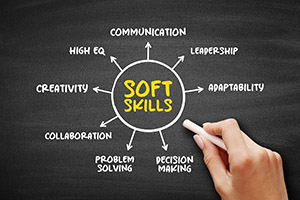
 As employers across the globe call out a shortage in critical thinking, communication, and adaptability among graduates, one university is taking bold action. Effat University in Jeddah, Saudi Arabia, is proving that soft skills aren’t just teachable they’re essential. And they belong at the heart of every curriculum.
By embedding leadership, emotional intelligence, and collaboration into every program from engineering to business the university is taking a bold stance: technical knowledge alone isn’t enough. In an era shaped by automation and global teamwork, Effat is positioning its graduates to stand out where it counts most in the human skills that machines can’t replace.
“Soft skills are no longer optional; they are foundational”, says Dr. Haifa Jamalallail President of Effat University. At Effat, we’re not just preparing students to enter the workforce; we’re preparing them to lead it. Communication, adaptability, and collaboration are built into every part of the student journey here.”
The Disconnect Between Degrees and Workforce Readiness
The growing disconnect between traditional degrees and real-world workforce readiness is pushing companies to rethink what truly matters in hiring. A striking 69% of U.S. executives now say they plan to prioritize candidates with strong soft skills, particularly transferable skills that enable employees to move fluidly across roles and adapt in fast-changing environments shown in the LinkedIn Global Talent Trends under Trends in Hiring.
Erin Scruggs, LinkedIn’s VP and Head of Global Talent, previously said “AI has the potential to lead to major shifts in how we hire and who we hire. As automation takes over routine, repeatable tasks, the value of inherently human abilities like problem-solving, adaptability, and collaboration becomes even more pronounced”. These are not skills typically developed through traditional academic programs, but they are increasingly essential for organizational agility.
The gap between academic knowledge and workplace readiness has never been clearer or more urgent.
This disconnect is especially relevant in Saudi Arabia. As highlighted in Arthur Little’s Harnessing Human Capital for Economic Success, traditional educational programs often fall short in delivering the specialized technical skills, practical experience, and soft skills required by emerging industries and national megaprojects.
Why This Matters Now More Than Ever
In an era defined by automation, hybrid work, and cross-cultural teams, soft skills are not just a “nice to have”, but they’re a strategic imperative. The UK Government found that among 1,045 UK employers, 88% rated problem-solving skills as highly important, while 85% valued both adaptability and collaboration. These findings highlight a global trend: employers around the world increasingly seek graduates with strong soft skills to thrive in today’s dynamic workplace.
This is supported by The World Economic Forum’s Future of Jobs Report 2023, which cited analytical thinking, creativity, leadership, and resilience among the most in-demand skills through 2027.
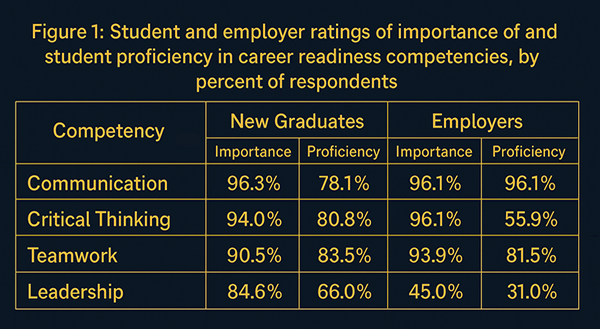
Yet despite their importance, there’s a striking disconnect between how graduates perceive their readiness and how employers actually assess it. As shown in Figure 1 produced by NACE’s 2024 Student Survey and Job Outlook 2025 survey, new graduates consistently rate themselves as more proficient than employers do across nearly every career readiness competency. For instance, while 90.5% of graduates view teamwork as important and 83.5% believe they are proficient, employers rate their teamwork proficiency much lower at just 55.9%. Likewise, 80.8% of graduates feel confident in their critical thinking skills, yet employers assess their proficiency at only 55.9%.
This gap underscores the need for more intentional development of soft skills in education and early career programs, ensuring graduates are not just confident, but truly prepared to meet the demands of the modern workforce.
Bayt a job portal that connects employers and job seekers in Saudi Arabia supports this recognising the demand for soft skills such as adaptability, problem-solving, leadership, and teamwork is on the rise in Saudi Arabia. Bayt insights indicate that these skills are increasingly critical for job seekers aiming to stand out in the competitive job market.
Effat University’s Bold Answer to the Soft Skills Crisis
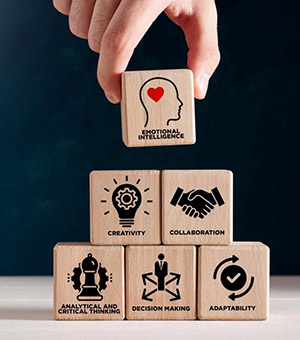 Effat University is rising to meet one of the most pressing challenges in global education today: the widening gap in soft skills among graduates. In a world where communication, leadership, adaptability, and emotional intelligence are just as crucial as technical expertise, Effat is pioneering an integrated, intentional approach that weaves these essential capabilities into every aspect of student life and learning.
Curriculum With a Human Touch:
At Effat, soft skills are not treated as optional add-ons or extracurricular bonuses they are fundamental outcomes of every degree program. Whether in engineering, business, or design, students develop communication, leadership, and problem-solving abilities through embedded coursework and interdisciplinary learning.
Take, for instance, the Architecture program. Senior students are given the unique opportunity to develop their capstone projects in collaboration with major institutions, such as the Royal Commission for the Holy Sites of Makkah. A standout example is the Al-Osayla Project, where students worked directly with professionals to design urban developments around sacred sites. These real-world collaborations challenged students to present ideas to senior stakeholders, manage project teams, and address complex technical and cultural constraints.
“In the Architecture program at Effat University, students move beyond technical mastery to lead real-world projects,” says Dr. Asmaa Ibrahim, Professor & Dean of ECoAD & Director of MSAU. “They present to stakeholders, manage diverse teams, and solve culturally sensitive design challenges that enable skills that are essential for architects working in today’s complex environments.”
Soft Skills Labs and Workshops
Effat has gone further by launching dedicated Soft Skills Studios, where students gain practical, hands-on training in areas like emotional intelligence, digital storytelling, cross-cultural communication, and virtual collaboration. These labs simulate real-world environments and professional scenarios, ensuring students not only learn concepts but also apply them under pressure.
As Dr. Asmaa Ibrahim highlights:
“At Effat University, our students in Architecture, Design, and Cinematic Arts really grow beyond just technical skills. They learn how to work together on challenging projects, clearly share their ideas, meet deadlines, and connect with real communities. Whether they’re designing innovative spaces or creating compelling stories, their creativity is supported by teamwork, flexibility, and practical problem-solving.”
Mentorship-First Model
Effat's commitment to soft skills extends into mentoring. Every student benefits from guidance not only from faculty but also from seasoned industry professionals. Mentorship goes beyond academic advising focusing on personal growth, professional resilience, and the development of lifelong networks.
Mentors coach students on how to build a personal brand, handle workplace dynamics, and navigate career transitions. Whether it’s a design critique or career path consultation, these interactions reinforce the habits of self-reflection, adaptability, and strategic communication qualities essential for long-term success.
Beyond Grades: Building the Communicators and Problem-Solvers of Tomorrow
By placing human-centered skills on par with technical education, Effat is empowering students to thrive in complex, fast-changing environments, whether in boardrooms, innovation labs, or community spaces.
Academic achievement alone is no longer enough. The leaders of tomorrow must know how to think critically, communicate clearly, and collaborate across borders and disciplines.
Effat University is making that future a reality today.
